

Overlay Images Using Weighted Overlay
SUMMARY
Overlay Images Using Weighted Overlay blends two images using a weighted (alpha) overlay.
It computes image_a * weight_a + image_b * weight_b per pixel. Both images must share the same (H, W) — resize one with resize_image_with_aspect_fit first if they differ. Setting weight_a + weight_b == 1.0 produces a standard cross-fade; weights that sum to more or less than 1.0 deliberately brighten or darken the blend.
Use this Skill when you want to blend two same-size images with configurable per-image weights.
The Skill
from telekinesis import pupil

blended_image = pupil.overlay_images_using_weighted_overlay(
    image_a=image_a,
    image_b=image_b,
    weight_a=0.5,
    weight_b=0.5,
)Example
Image A
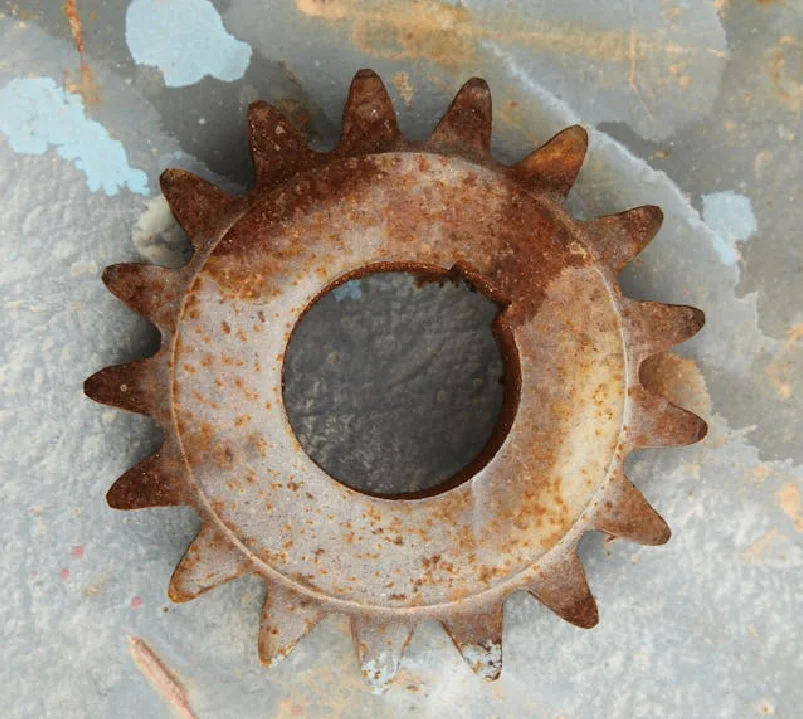
First input image
Image B
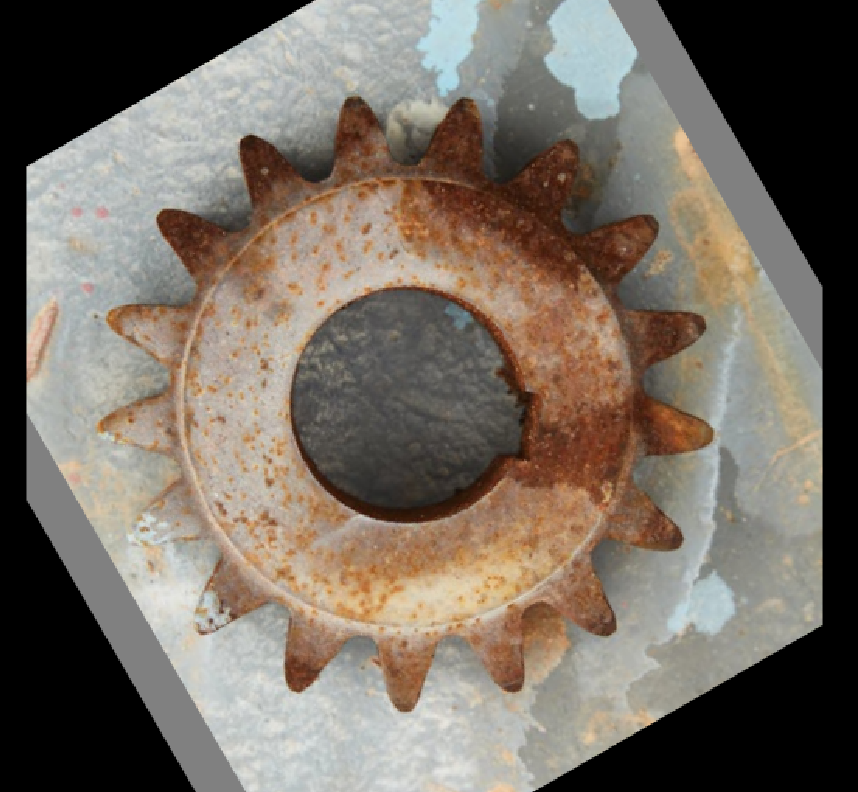
Second input image, a rotated copy of Image A
Blended Image
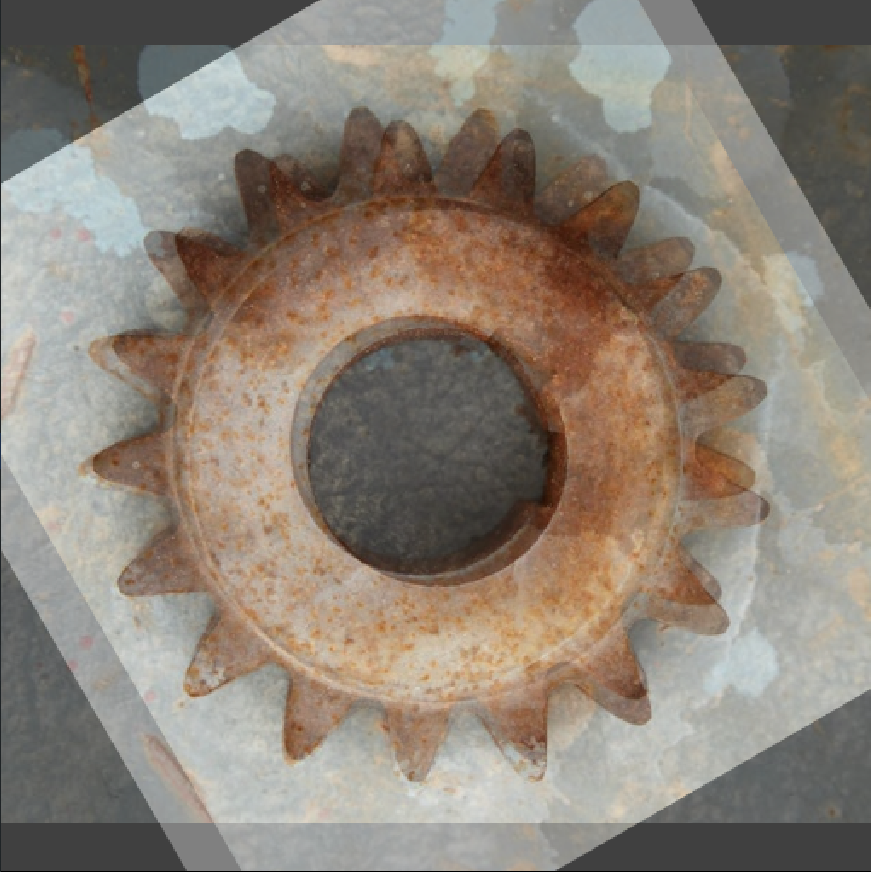
Weighted overlay with weight_a = weight_b = 0.5
The Code
"""Demonstrates weighted overlay blending of two images."""

from loguru import logger
import rerun as rr

from telekinesis import pupil, datatypes


def overlay_images_using_weighted_overlay_example():
    """Blends two images using weighted overlay."""
    # ===================== Load Image ==========================================
    image_url = "https://assets.telekinesis.ai/examples/v1/images/rusted_metal_gear.jpg"
    image_a = datatypes.Image.from_url(image_url)
    image_a = pupil.resize_image_with_aspect_fit(
        image=image_a,
        resize_width=512,
        resize_height=512,
    )

    # ===================== Create Second Image ==========================================
    image_b = pupil.rotate_image(
        image=image_a, angle_in_deg=60.0, keep_image_size=True
    )

    # ===================== Run Skill ==========================================
    filtered_image = pupil.overlay_images_using_weighted_overlay(
        image_a=image_a,
        image_b=image_b,
        weight_a=0.5,
        weight_b=0.5,
    )

    # ===================== Log ================================================
    logger.success(f"Weighted overlay between {image_a} and {image_b}")
    logger.success(f"Result: {filtered_image}")

    # ===================== Visualization  (Optional) ======================
    rr.init("overlay_images_using_weighted_overlay_example", spawn=True)
    datatypes.visualize(image_a, entity_path="1-Image A")
    datatypes.visualize(image_b, entity_path="2-Image B")
    datatypes.visualize(filtered_image, entity_path="3-Blended")

if __name__ == "__main__":
    overlay_images_using_weighted_overlay_example()
Runnable examples are available in the Telekinesis examples repository.
Follow the README in that repository to set up the environment, run this specific example with:
cd telekinesis-examples
python examples/image_processing/overlay_images_using_weighted_overlay.py
Parameter Configuration
| Parameter | Type | Default | Description |
|---|---|---|---|
image_a | datatypes.Image | np.ndarray | required | First input image, shape (H, W) or (H, W, C) |
image_b | datatypes.Image | np.ndarray | required | Second input image, blended with image_a. Must have the same (H, W) as image_a |
weight_a | datatypes.Float | float | int | 0.5 | Weight applied to image_a. Increasing makes the blend look more like image_a |
weight_b | datatypes.Float | float | int | 0.5 | Weight applied to image_b. Increasing makes the blend look more like image_b |
Returns
| Type | Description |
|---|---|
datatypes.Image | Same shape as image_a, containing the weighted blend |
Raises
| Exception | Condition |
|---|---|
TypeError | Any parameter has an invalid type |
ValueError | image_a and image_b have different width or height |
ConfigurationError | The TELEKINESIS_API_KEY environment variable is not set |
SerializationError | The request input failed to serialize, the response was not returned as an Arrow stream, or the response failed to deserialize |
RequestTimeoutError | The request to the Pupil service timed out |
TransportError | A network failure occurred before a response was received |
ClientError | The Pupil service rejected the request due to invalid or malformed input (HTTP 400/422), an unrecognized endpoint (HTTP 404), or another unexpected 4xx response |
AuthenticationError | The API key was rejected as invalid or expired (HTTP 401) |
AuthenticationServiceError | The authentication service returned an invalid response, was temporarily unavailable, or timed out (HTTP 502/503/504) |
ServerError | The Pupil service returned a 5xx or otherwise unexpected error response |
How to Tune the Parameters
The overlay_images_using_weighted_overlay Skill exposes two weights that control each image's contribution to the blend.
weight_a
- Controls: How strongly
image_acontributes to the output. - Units: Dimensionless
- Default:
0.5 - Increase → the blend looks more like
image_a - Decrease → the blend looks less like
image_a - Typical range:
0.0–1.0
weight_b
- Controls: How strongly
image_bcontributes to the output. - Units: Dimensionless
- Default:
0.5 - Increase → the blend looks more like
image_b - Decrease → the blend looks less like
image_b - Typical range:
0.0–1.0
TIP
Best practice: Keep weight_a + weight_b == 1.0 for a standard cross-fade that preserves overall brightness. Use weights that sum to more or less than 1.0 only when you deliberately want to brighten or darken the blend, e.g. for a double-exposure effect.
Where to Use the Skill
Common pipelines include:
- Visualization overlays – Blend an annotation or heatmap over the source image
- Cross-fades – Transition smoothly between two frames or states
- Multi-exposure compositing – Combine differently exposed captures of the same scene
- Data augmentation – Blend pairs of images to synthesize training variations
Alternative Skills
| Skill | vs. Overlay Images Using Weighted Overlay |
|---|---|
| bitwise_difference_images | Highlights where two images differ (absolute difference) instead of blending them together. |
| bitwise_and_images | Combines two binary masks with a logical AND instead of an intensity-weighted sum. |
| bitwise_or_images | Combines two binary masks with a logical OR instead of an intensity-weighted sum. |
When Not to Use the Skill
Do not use Overlay Images Using Weighted Overlay when:
- You need logical mask combination, not intensity blending (use
bitwise_and_images,bitwise_or_images, orbitwise_xor_imagesinstead) - You need to highlight differences rather than blend them away (use
bitwise_difference_imagesinstead) image_aandimage_bhave different sizes (resize one to match first, e.g. withresize_image_with_aspect_fit)- You need per-pixel or per-region alpha, not a single global weight per image (this Skill applies one scalar weight to the whole image)