
Bitwise AND Images
SUMMARY
Bitwise AND Images computes the pixel-wise bitwise AND of two images or masks.
Each output pixel is the bitwise AND of the corresponding pixels in image_a and image_b. For 0/255 binary masks this keeps a pixel only where both inputs are nonzero, i.e. it isolates the intersection of two regions. The two inputs must share the same width and height — resize one first (e.g. with resize_image_with_aspect_fit) if they don't.
Use this Skill when you want to mask an image with a binary mask, keeping only pixels inside a region of interest.
The Skill
from telekinesis import pupil

result_image = pupil.bitwise_and_images(image_a=image_a, image_b=image_b)Example
Image A
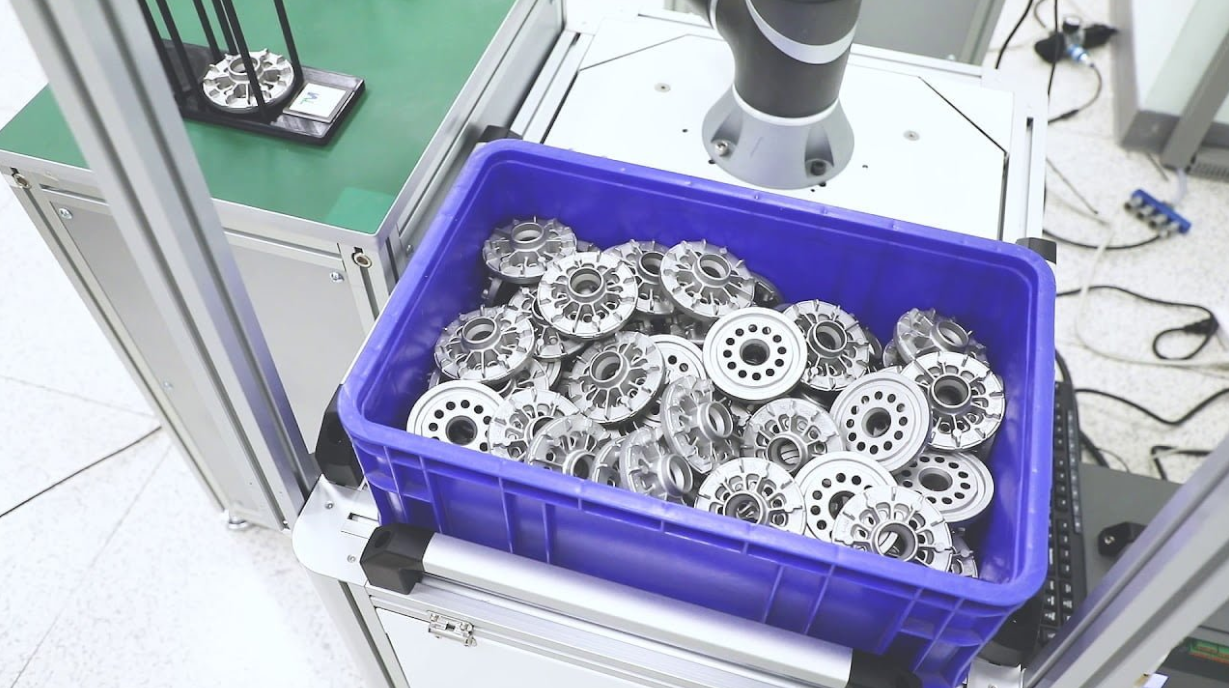
Original image
Image B
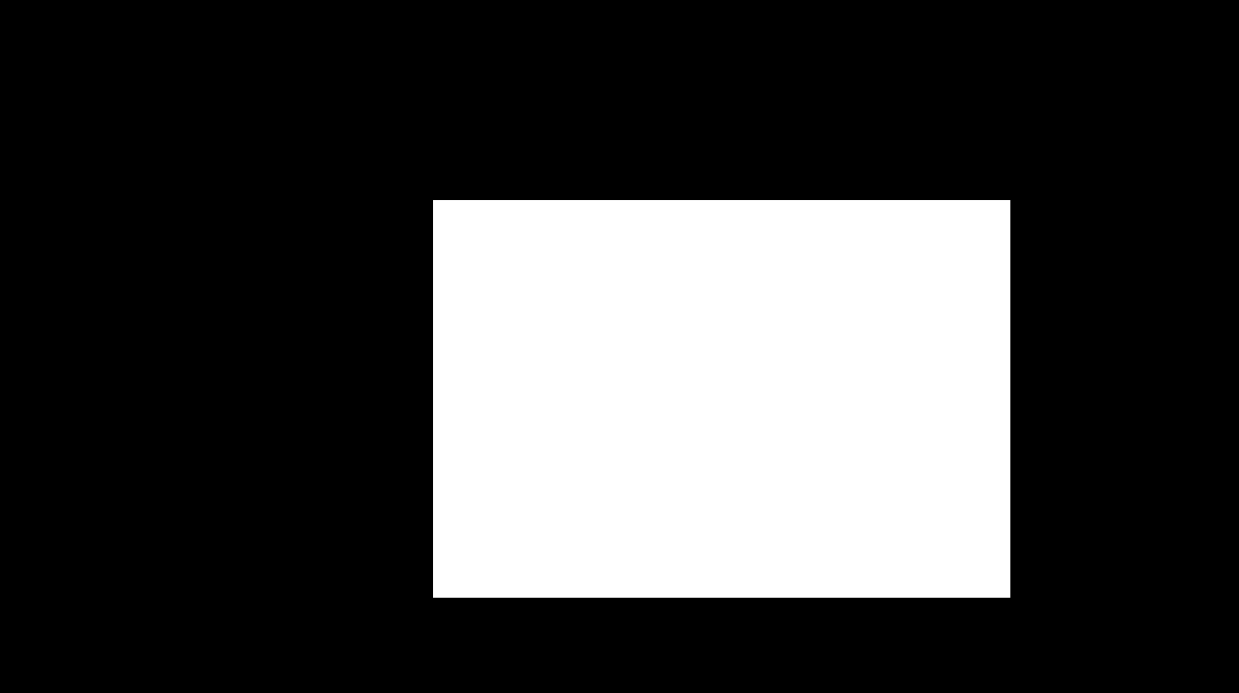
Binary mask marking the region of interest
Result
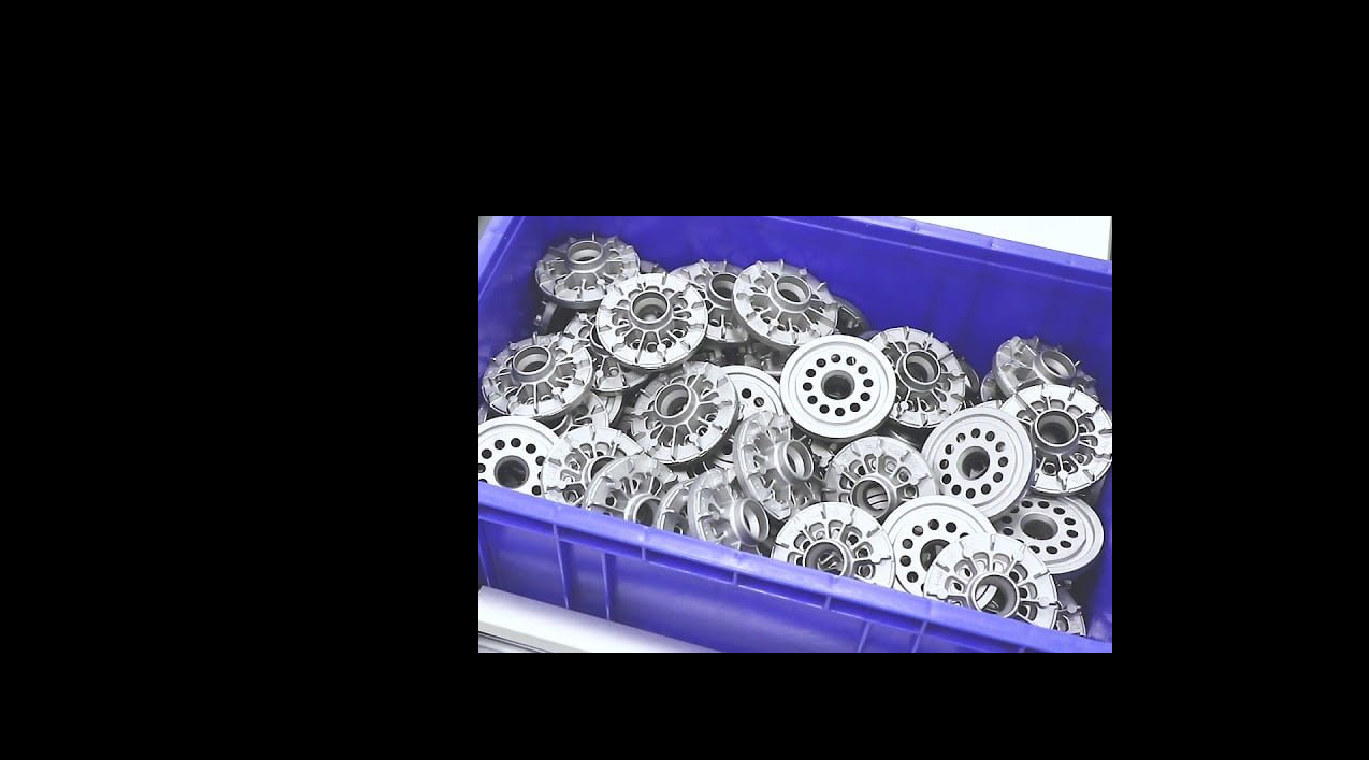
Bitwise AND result — only pixels inside the mask are kept
The Code
"""Demonstrates bitwise AND operation between two images."""

import numpy as np
from loguru import logger
import rerun as rr

from telekinesis import pupil, datatypes


def bitwise_and_images_example():
    """Performs bitwise AND between two images."""
    # ===================== Load Image ==========================================
    image_url = "https://assets.telekinesis.ai/examples/v1/images/bin_picking_metal_2.jpg"
    image = datatypes.Image.from_url(image_url)

    # ===================== Create Mask ==========================================
    bbox = [450, 210, 1040, 616]
    x1, y1, x2, y2 = bbox
    mask_data = np.zeros(image.shape[:2], dtype=np.uint8)
    mask_data[y1:y2, x1:x2] = 255
    mask = datatypes.Image(mask_data)

    # ===================== Run Skill ==========================================
    result_image = pupil.bitwise_and_images(image_a=image, image_b=mask)

    # ===================== Log ================================================
    logger.success(f"Bitwise AND between {image} and {mask} completed.")
    logger.success(f"Result: {result_image}")

    # ===================== Visualization  (Optional) ==========================
    rr.init("bitwise_and_images_example", spawn=True)
    datatypes.visualize(image, entity_path="1-Original")
    datatypes.visualize(mask, entity_path="2-Mask")
    datatypes.visualize(result_image, entity_path="3-Filtered")

if __name__ == "__main__":
    bitwise_and_images_example()
Runnable examples are available in the Telekinesis examples repository.
Follow the README in that repository to set up the environment, run this specific example with:
cd telekinesis-examples
python examples/image_processing/bitwise_and_images.py
Parameter Configuration
| Parameter | Type | Default | Description |
|---|---|---|---|
image_a | datatypes.Image | np.ndarray | required | First input image, shape (H, W) or (H, W, C) |
image_b | datatypes.Image | np.ndarray | required | Second input image or mask, combined with image_a via bitwise AND. Must have the same (H, W) as image_a — use resize_image_with_aspect_fit first if the sizes differ |
Returns
| Type | Description |
|---|---|
datatypes.Image | Same shape as image_a, containing the pixel-wise bitwise AND of the two inputs |
Raises
| Exception | Condition |
|---|---|
TypeError | image_a or image_b has an invalid type |
ValueError | image_a and image_b have different width or height |
ConfigurationError | The TELEKINESIS_API_KEY environment variable is not set |
SerializationError | The request input failed to serialize, the response was not returned as an Arrow stream, or the response failed to deserialize |
RequestTimeoutError | The request to the Pupil service timed out |
TransportError | A network failure occurred before a response was received |
ClientError | The Pupil service rejected the request due to invalid or malformed input (HTTP 400/422), an unrecognized endpoint (HTTP 404), or another unexpected 4xx response |
AuthenticationError | The API key was rejected as invalid or expired (HTTP 401) |
AuthenticationServiceError | The authentication service returned an invalid response, was temporarily unavailable, or timed out (HTTP 502/503/504) |
ServerError | The Pupil service returned a 5xx or otherwise unexpected error response |
How to Tune the Parameters
bitwise_and_images has no tunable parameters — it takes two required images and combines them with a fixed AND operation. The only requirement is that image_a and image_b have matching width and height.
TIP
Best practice: If image_b is a mask (e.g. from a bounding box or a segmentation skill), build it at the same resolution as image_a to avoid resizing artifacts. If the sizes already differ, resize with resize_image_with_aspect_fit before calling this Skill rather than relying on it to fail loudly.
Where to Use the Skill
Common pipelines include:
- ROI masking – Keep only the pixels inside a bounding box or region mask before further processing
- Mask intersection – Combine two segmentation masks into their overlap
- Selective filtering – Restrict a downstream operation (e.g. color analysis) to a masked region
Alternative Skills
| Skill | vs. Bitwise AND Images |
|---|---|
| bitwise_or_images | Computes the union of two images instead of their intersection. |
| bitwise_xor_images | Keeps pixels that differ between the two inputs instead of pixels shared by both. |
| bitwise_not_image | Inverts a single mask; combine with this Skill to mask out a region instead of masking it in. |
When Not to Use the Skill
Do not use Bitwise AND Images when:
- You need the union of two masks (use
bitwise_or_imagesinstead) - You need pixels that differ between two masks (use
bitwise_xor_imagesfor a logical comparison, orbitwise_difference_imagesfor an intensity difference) image_aandimage_bhave different dimensions (resize one to match first, e.g. withresize_image_with_aspect_fit)- You only have one mask and want to invert it (use
bitwise_not_imageinstead)