

Transform Using Pyramid Upsampling
SUMMARY
Transform Using Pyramid Upsampling upsamples an image using Gaussian pyramid.
Pyramid up increases image resolution by upsampling and smoothing, useful for image enlargement and multi-scale reconstruction. This operation doubles the image dimensions and applies smoothing to create a larger image. It's commonly used to reconstruct images from pyramid representations or to upsample images for visualization or further processing.
Use this Skill when you want to increase image resolution using pyramid upsampling.
The Skill
from telekinesis import pupil

upsampled_image = pupil.transform_image_using_pyramid_upsampling(
    image=image,
    scale_factor=datatypes.Float(2.0),
)Example
Input Image
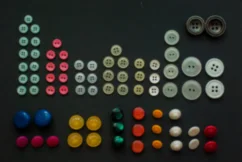
Original low-resolution image
Upsampled Level 1
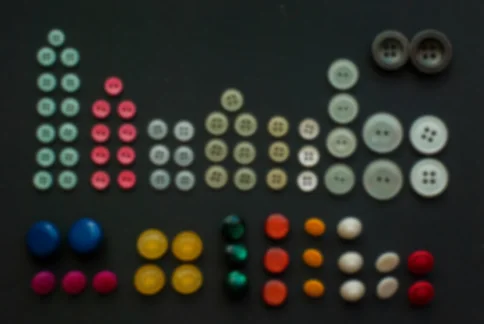
Upsampled image, Pyramid Level 1, with scale_factor=2.0 - resolution doubled
Upsampled Level 2
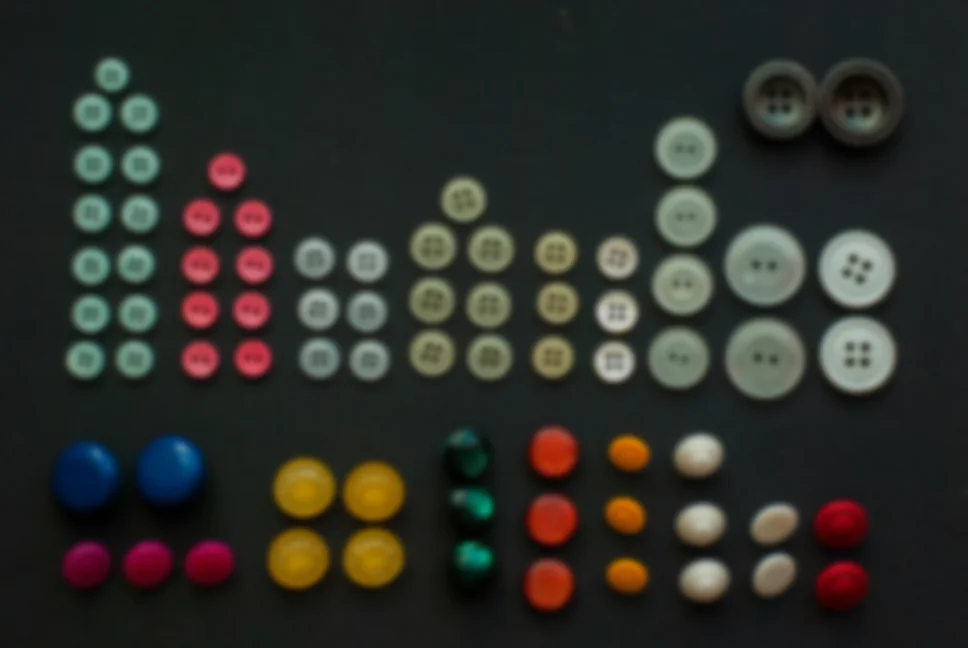
Upsampled image, Pyramid Level 2, with scale_factor=2.0 - resolution doubled
Upsampled Level 3
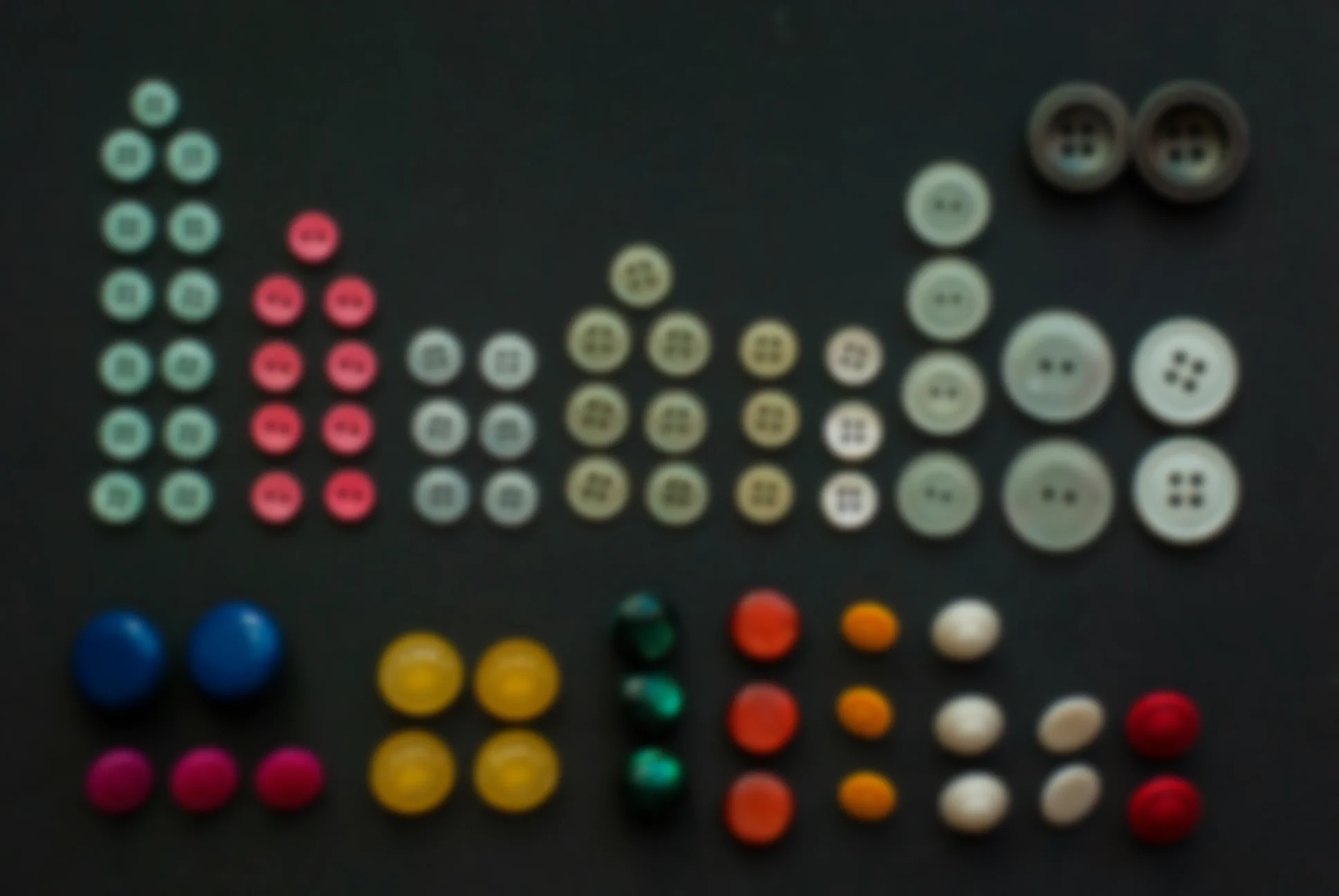
Upsampled image, Pyramid Level 3, with scale_factor=2.0 - resolution doubled
The Code
from telekinesis import pupil
from datatypes import io
import pathlib
from loguru import logger

DATA_DIR = pathlib.Path("path/to/telekinesis-data")

# Load image
filepath = str(DATA_DIR / "images" / "buttons_arranged_downsampled.webp")
image = io.load_image(filepath=filepath)
logger.success("Loaded image shape: {}", image.to_numpy().shape)

# Apply pyramid upsampling transformation
filtered_image = pupil.transform_image_using_pyramid_upsampling(
    image=image,
    scale_factor=2.0,
)

# Access results
filtered_image_np = filtered_image.to_numpy()
logger.success("Applied pyramid upsampling. Transformed output image shape: {}", filtered_image_np.shape)
The Explanation of the Code
The code begins by importing the necessary modules: pupil for image processing operations, io for data handling, pathlib for path management, and loguru for logging.
from telekinesis import pupil
from datatypes import io
import pathlib
from loguru import logger
Next, an image is loaded from a .png file using the io.load_image function. The input image may be either grayscale or color.
DATA_DIR = pathlib.Path("path/to/telekinesis-data")

# Load image
filepath = str(DATA_DIR / "images" / "buttons_arranged_downsampled.webp")
image = io.load_image(filepath=filepath)
The main operation uses the transform_image_using_pyramid_upsampling Skill from the pupil module. This Skill upsamples an image using Gaussian pyramid by interpolating and smoothing to increase resolution. The parameters can be tuned to control the scale factor depending on the characteristics of the input image.
filtered_image = pupil.transform_image_using_pyramid_upsampling(
    image=image,
    scale_factor=2.0,
)
Finally, the upsampled image is converted to a NumPy array using to_numpy() for further processing, visualization, or downstream tasks.
filtered_image_np = filtered_image.to_numpy()
logger.success(f"Output image shape: {filtered_image_np.shape}")
This operation is particularly useful in robotics and vision pipelines for image enlargement, multi-scale reconstruction, and pyramid representation, where increasing image resolution using pyramid upsampling is required.
Running the Example
Runnable examples are available in the Telekinesis examples repository. Follow the README in that repository to set up the environment. Once set up, you can run this specific example with:
cd telekinesis-examples
python examples/pupil_examples.py --example transform_image_using_pyramid_upsampling
How to Tune the Parameters
The transform_image_using_pyramid_upsampling Skill has 1 parameter:
scale_factor (default: 2.0):
- The scaling factor for upsampling. Must be greater than 1
- Units: Dimensionless (multiplier)
- Increase to create larger output
- Decrease to create smaller output (closer to original size)
- Typical range: 1.1–4.0 (min: 1.1, max: 4.0)
- Use 2.0 for standard pyramid upsampling (double size); 4.0 for quadruple size
TIP
Best practice: Pyramid up is the inverse of pyramid down. Use scale_factor=2.0 to reverse a pyramid_downsampling operation.
Where to Use the Skill
Transform Using Pyramid Up is commonly used in the following pipelines:
- Pyramid reconstruction - Rebuild images from pyramid representations
- Image enlargement - Increase image size for visualization
- Laplacian pyramids - Create residual images for blending
- Super-resolution preprocessing - Initial upsampling before enhancement
- Multi-scale fusion - Combine information from different scales
Related skills to build such a pipeline:
transform_image_using_pyramid_downsampling: Downsample imagesfilter_image_using_gaussian_blur: Smoothing operations
Alternate Skill
Pyramid upsampling performs fixed-factor, smooth interpolation for scale-space reconstruction. For arbitrary resizing or sharper results, use resize-based operations instead.
| Skill | When to use it instead |
|---|---|
transform_image_using_pyramid_downsampling | Use for reducing image resolution or building Gaussian / Laplacian pyramids. Pyramid up is its inverse. |
filter_image_using_gaussian_blur | Use when you only need smoothing, not resolution change. Pyramid up always increases image size. |
When Not to Use the Skill
Do not use Transform Using Pyramid Up when:
- You need sharp, pixelated upsampling (Use resize with NEAREST interpolation)
- You want custom interpolation methods (Use resizing instead)
- You need non-2.0 scale factors (Use resizing for arbitrary scaling)
- You're doing super-resolution (Pyramid up provides basic upsampling; use specialized super-resolution methods)